
The Four Pillars of Inquiry
Every question matters. Every conversation matters. Every person matters.
Join us in helping build a culture of inquiry.
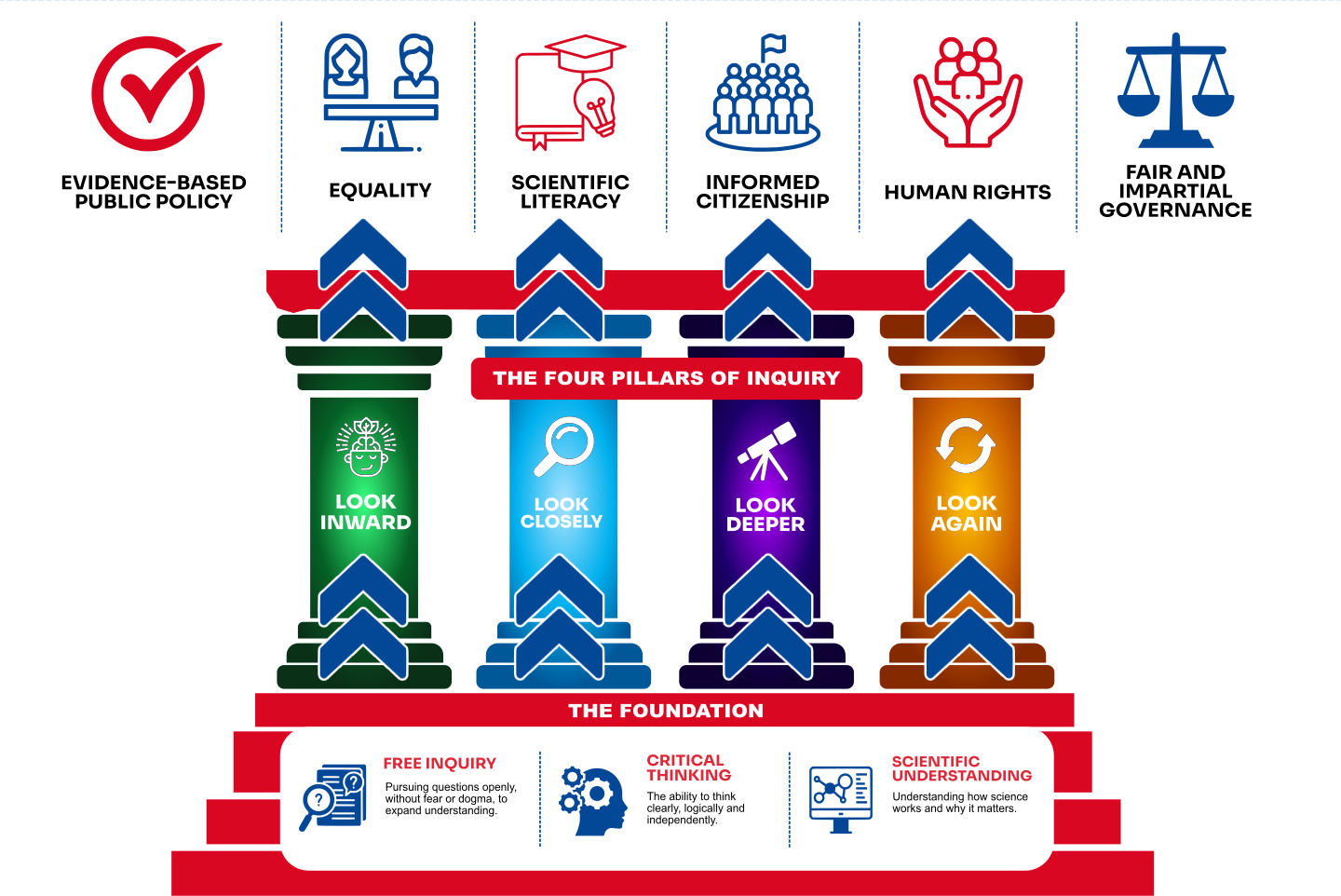

Look Inward
The first and most important object of inquiry is not others—it is ourselves.
Our experiences, assumptions, values, biases, and emotions shape how we interpret the world. Our minds are not perfect observers of reality—they can deceive us through faulty memories, unconscious biases, and mistaken perceptions.
Looking inward is not merely the first step; it is the foundation upon which every other inquiry rests.
By understanding both the strengths and limitations of our own minds, we become better equipped to evaluate evidence fairly, understand others more deeply, and pursue truth with intellectual honesty.

Look Closely
Good inquiry never mistakes confidence for certainty.
Inquiry is not a destination—it is a continual process of learning. Our conclusions are only as reliable as the evidence upon which they are based, and even our best conclusions may change as new evidence emerges or our understanding improves.
Looking again means remaining open to revising our beliefs, not because inquiry has failed, but because it is working exactly as it should.
Inquiry cannot guarantee truth. It can, however, bring us ever closer through better evidence, better questions, and a continually improving understanding of the world.

Look Deeper
Good inquiry asks not only whether evidence exists, but how much confidence it deserves.
Not all evidence deserves the same level of confidence. Different kinds of evidence provide different levels of confidence, and understanding those differences is essential to sound reasoning. Looking deeper means evaluating the quality, reliability, and relevance of the evidence before drawing conclusions.
Looking deeper also means seeking additional evidence, considering alternative explanations,
and remaining open to changing our understanding as stronger evidence emerges. Evidence can
only persuade when we understand what makes it convincing.
Learning to evaluate evidence is therefore one of the most important skills of inquiry.

Look Again
Good inquiry examines a claim before accepting its conclusion.
The information presented to us is not always as reliable as it first appears. Claims may contain hidden assumptions, logical fallacies, misleading language, or conclusions that extend beyond the evidence provided.
Looking closely means carefully examining the argument itself—asking whether it is internally consistent, logically sound, and genuinely supported by the evidence presented.
Before asking whether a claim is true, first ask whether it has earned the right to be taken seriously.